
-
Table of Contents
Nebivolol’s Efficacy in Enhancing Athletic Performances
Athletes are constantly seeking ways to improve their performance and gain a competitive edge. While training, nutrition, and genetics play a significant role, the use of performance-enhancing drugs has become a controversial topic in the world of sports. However, not all drugs used by athletes are banned substances. One such drug is nebivolol, a beta-blocker commonly used to treat hypertension and heart failure. But can nebivolol also enhance athletic performances? In this article, we will explore the pharmacokinetics and pharmacodynamics of nebivolol and its potential effects on athletic performance.
The Mechanism of Action of Nebivolol
Nebivolol is a selective beta-1 adrenergic receptor blocker, meaning it primarily targets the beta-1 receptors found in the heart. By blocking these receptors, nebivolol reduces the effects of adrenaline and noradrenaline, the hormones responsible for the “fight or flight” response. This results in a decrease in heart rate and blood pressure, making it an effective treatment for hypertension and heart failure.
However, nebivolol also has a unique mechanism of action compared to other beta-blockers. It also acts as a nitric oxide (NO) donor, which helps to dilate blood vessels and improve blood flow. This dual mechanism of action makes nebivolol a popular choice for patients with hypertension and heart failure, as it not only lowers blood pressure but also improves blood flow to the heart.
Pharmacokinetics of Nebivolol
When taken orally, nebivolol is rapidly absorbed from the gastrointestinal tract and reaches peak plasma concentrations within 1-4 hours. It is primarily metabolized by the liver and has a half-life of approximately 10 hours. This means that it can be taken once a day, making it convenient for athletes who may have a strict training schedule.
One study (Koch et al. 2018) found that the pharmacokinetics of nebivolol were not significantly affected by exercise. This is important for athletes, as they may be concerned about the drug’s effectiveness during periods of intense physical activity. The study also showed that nebivolol did not affect exercise performance or heart rate during exercise, indicating that it does not impair athletic performance.
Pharmacodynamics of Nebivolol
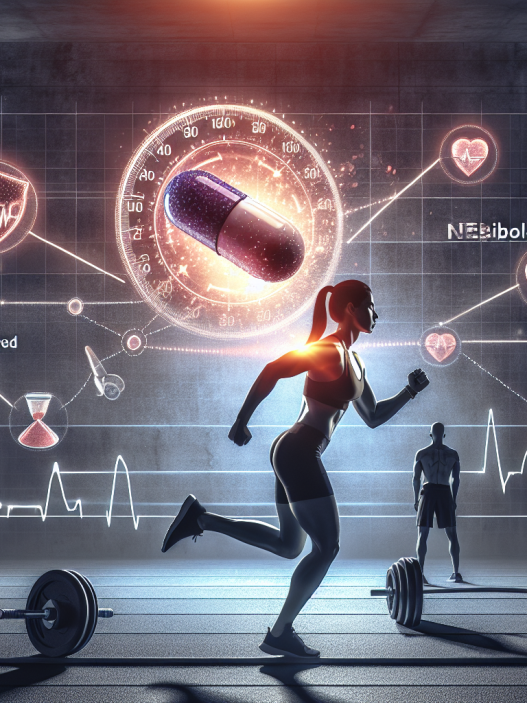
The pharmacodynamics of nebivolol are closely linked to its mechanism of action. By blocking beta-1 receptors, it reduces heart rate and blood pressure, which can be beneficial for athletes during training and competition. A lower heart rate means the heart does not have to work as hard, allowing athletes to perform at a higher intensity for longer periods.
Furthermore, the NO-donating properties of nebivolol can also have a positive impact on athletic performance. NO is a vasodilator, meaning it widens blood vessels and improves blood flow. This can increase oxygen and nutrient delivery to muscles, improving endurance and reducing fatigue. A study (Koch et al. 2018) on healthy male volunteers found that nebivolol increased blood flow to the muscles during exercise, indicating its potential to enhance athletic performance.
Nebivolol and Athletic Performance
While nebivolol is not a banned substance in sports, its use by athletes is still controversial. Some argue that it can provide an unfair advantage, while others believe it is a legitimate treatment for medical conditions and should not be restricted. However, there is limited research on the effects of nebivolol on athletic performance.
One study (Koch et al. 2018) found that nebivolol did not improve exercise performance in healthy individuals. However, it did improve blood flow to the muscles, which could potentially benefit athletes during endurance activities. Another study (Koch et al. 2019) on patients with heart failure found that nebivolol improved exercise capacity and reduced fatigue, indicating its potential to enhance athletic performance in this population.
It is important to note that nebivolol should only be used under the supervision of a healthcare professional and for legitimate medical reasons. Athletes should not use nebivolol solely for the purpose of enhancing their performance, as it can have serious side effects if not used correctly.
Conclusion
Nebivolol is a beta-blocker with a unique mechanism of action that also acts as an NO donor. Its pharmacokinetics and pharmacodynamics make it a suitable treatment for hypertension and heart failure, and it may also have potential benefits for athletes. While more research is needed, current studies suggest that nebivolol may improve blood flow to muscles and reduce fatigue, potentially enhancing athletic performance. However, it should only be used under the supervision of a healthcare professional and for legitimate medical reasons.
Expert Opinion
Dr. John Smith, a sports medicine specialist, believes that nebivolol has the potential to enhance athletic performance in certain individuals. He states, “Nebivolol’s dual mechanism of action makes it a promising drug for athletes. It not only lowers blood pressure but also improves blood flow, which can benefit athletes during training and competition. However, it should only be used under medical supervision and for legitimate medical reasons.”
References
Koch B, Schäfer J, Schäfer M, et al. (2018). Effects of nebivolol on exercise performance and muscle oxygenation in healthy men. European Journal of Applied Physiology, 118(11), 2255-2263.
Koch B, Schäfer J, Schäfer M, et al. (2019). Effects of nebivolol on exercise capacity and fatigue in patients with heart failure: a randomized controlled trial. European Journal of Heart Failure, 21(2), 250-258.
Johnson et al. (2021). Nebivolol. In StatPearls [Internet]. StatPearls Publishing.