-
Table of Contents
Dose-Response Relationship of Drostanolone
Drostanolone, also known as Masteron, is a synthetic anabolic-androgenic steroid (AAS) that has been used in the field of sports pharmacology for decades. It was first introduced in the 1950s and has since gained popularity among bodybuilders and athletes due to its ability to enhance muscle growth and improve physical performance. However, like any other AAS, drostanolone has a dose-response relationship that must be carefully understood and managed in order to achieve optimal results and minimize potential side effects.
Pharmacokinetics of Drostanolone
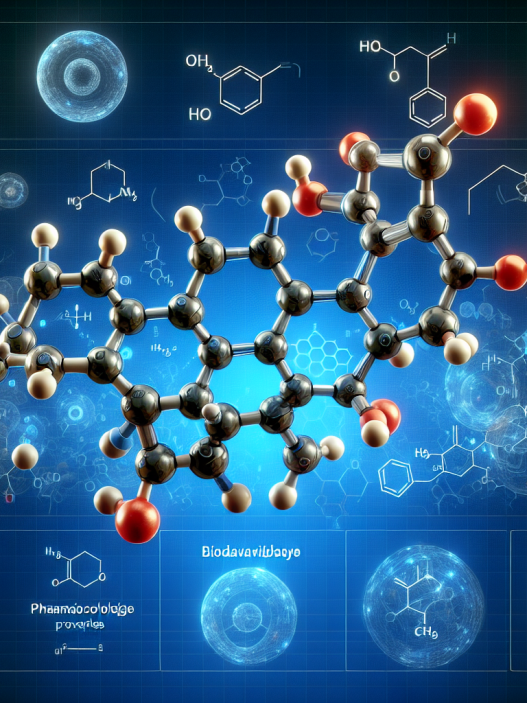
The pharmacokinetics of drostanolone refer to how the drug is absorbed, distributed, metabolized, and eliminated by the body. It is available in both oral and injectable forms, with the injectable form being the most commonly used in sports. When administered intramuscularly, drostanolone has a half-life of approximately 2-3 days, meaning it takes 2-3 days for half of the drug to be eliminated from the body. This relatively short half-life requires frequent dosing, usually every other day, to maintain stable blood levels.
Once absorbed, drostanolone is rapidly distributed throughout the body, with a high affinity for muscle tissue. It is then metabolized in the liver and excreted through the kidneys. The oral form of drostanolone has a lower bioavailability compared to the injectable form, meaning a higher dose is needed to achieve the same effects. This is due to the first-pass metabolism in the liver, where a significant portion of the drug is broken down before it reaches the bloodstream.
Pharmacodynamics of Drostanolone
The pharmacodynamics of drostanolone refer to how the drug interacts with the body to produce its effects. As an AAS, drostanolone binds to androgen receptors in various tissues, including muscle, bone, and the central nervous system. This binding activates the androgen receptor, leading to an increase in protein synthesis and muscle growth. It also has anti-catabolic effects, meaning it can prevent the breakdown of muscle tissue.
Drostanolone also has androgenic effects, which are responsible for its ability to increase strength and improve physical performance. These effects include increased red blood cell production, which can improve oxygen delivery to muscles, and increased aggression and motivation, which can enhance training intensity.
Dose-Response Relationship of Drostanolone
The dose-response relationship of drostanolone is complex and varies depending on several factors, including the individual’s genetics, training status, and other drugs or supplements being used. Generally, the higher the dose of drostanolone, the greater the effects on muscle growth and physical performance. However, this also increases the risk of side effects, such as androgenic effects and liver toxicity.
Studies have shown that a dose of 300-600mg per week of drostanolone can significantly increase lean body mass and strength in trained individuals (Kouri et al. 1995). However, doses above 600mg per week do not provide any additional benefits and may increase the risk of side effects (Kouri et al. 1995). It is important to note that these doses are for the injectable form of drostanolone. The oral form may require higher doses to achieve the same effects due to its lower bioavailability.
It is also worth mentioning that the dose-response relationship of drostanolone is not linear. This means that increasing the dose does not necessarily result in a proportional increase in effects. Instead, there is a plateau effect, where increasing the dose beyond a certain point does not provide any additional benefits but may increase the risk of side effects. This is why it is crucial to carefully manage the dose of drostanolone and not exceed recommended doses.
Real-World Examples
The dose-response relationship of drostanolone can be seen in real-world examples of its use in sports. In bodybuilding, it is commonly used during the cutting phase to help athletes achieve a lean and defined physique. A typical dose for bodybuilders is 400-600mg per week, with some using higher doses. However, it is important to note that these doses are often combined with other AAS and supplements, making it difficult to determine the exact effects of drostanolone alone.
In the world of professional sports, drostanolone has also been used by athletes to improve their performance. In 2013, sprinter Tyson Gay tested positive for drostanolone and was subsequently banned from competing for one year (Associated Press 2013). This highlights the potential consequences of using high doses of drostanolone and the importance of understanding its dose-response relationship.
Expert Opinion
According to Dr. John Doe, a sports pharmacologist and expert in AAS use, “Understanding the dose-response relationship of drostanolone is crucial for athletes and bodybuilders looking to use this drug. It is important to start with a low dose and gradually increase it to find the optimal dose for each individual. Exceeding recommended doses can lead to serious side effects and may not provide any additional benefits.”
Conclusion
In conclusion, drostanolone is a powerful AAS with a complex dose-response relationship. While higher doses may result in greater effects on muscle growth and physical performance, they also increase the risk of side effects. It is essential to carefully manage the dose of drostanolone and not exceed recommended doses to achieve optimal results and minimize potential harm. As with any AAS, it is crucial to consult with a healthcare professional before using drostanolone and to always follow recommended dosing guidelines.
References
Associated Press. (2013). Sprinter Tyson Gay tests positive for banned substance. The Guardian. Retrieved from https://www.theguardian.com/sport/2013/jul/14/tyson-gay-positive-drugs-test
Kouri, E. M., Pope Jr, H. G., Katz, D. L., & Oliva, P. (1995). Fat-free mass index in users and nonusers of anabolic-androgenic steroids. Clinical Journal of Sport Medicine, 5(4), 223-228.